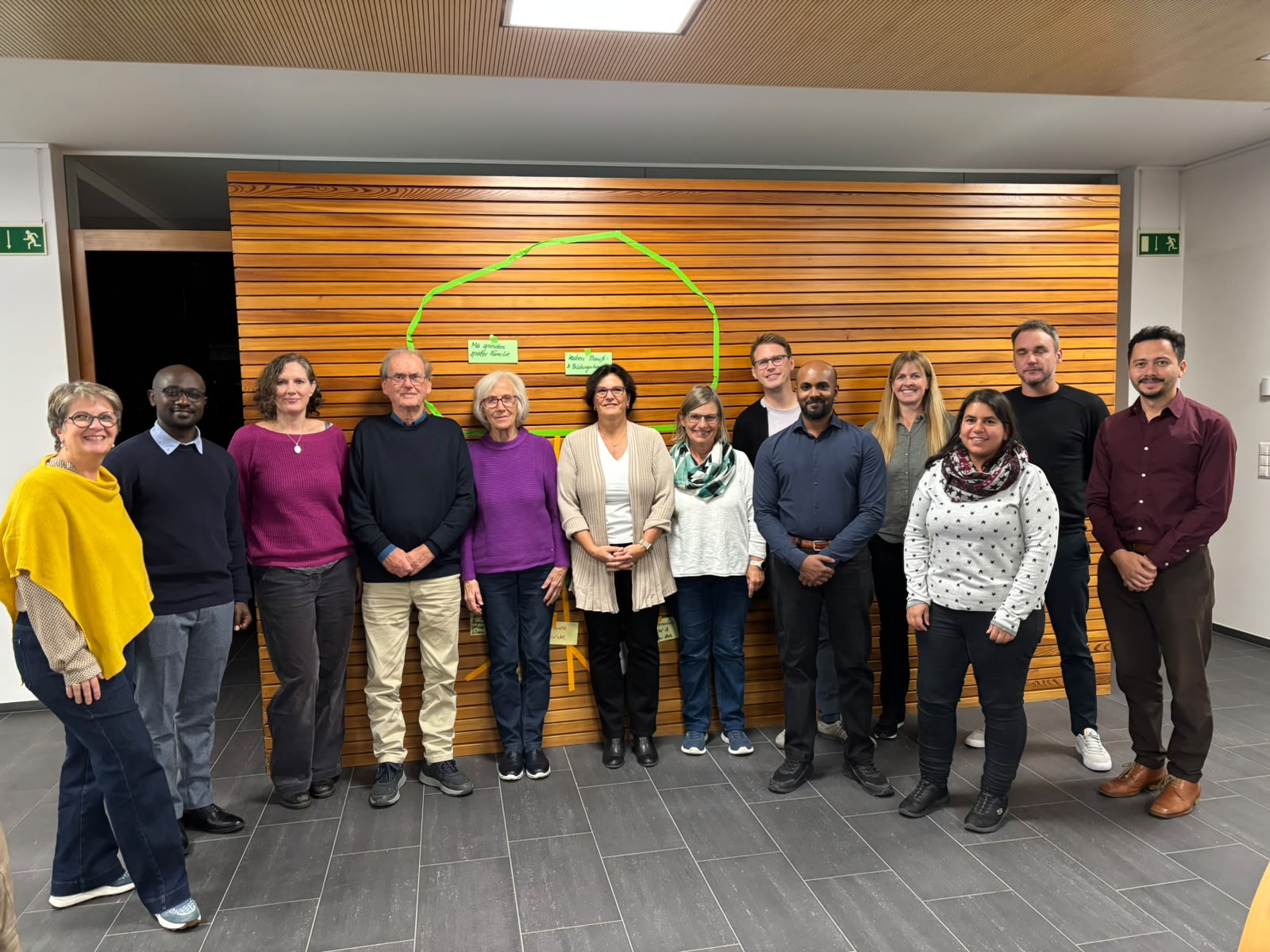
How does a good project idea become a realistic project plan? This question was the focus of a workshop jointly organized by the Liechtenstein Development Service (LED) and the Network for Development Cooperation on October 29, 2026, in Schaan.
Volunteers from various nonprofit associations and development cooperation organizations came together to deepen their knowledge of project management and exchange ideas with one another. The diversity of the initiatives represented was also evident geographically: Among other places, the participants are involved in projects in India, Nigeria, Ghana, Nepal, and Mexico.
The workshop focused on the question of how development cooperation projects can be carefully planned and successfully implemented. Speaker Birgit Anna Mayerhofer drew on her many years of experience in international project management to provide practical fundamentals on the project cycle. Among other things, she presented the planning tools Logical Framework (LogFrame) and Theory of Change, as well as key considerations for creating realistic project budgets.
The LED and the Network for Development Cooperation are committed to supporting even smaller organizations—many of which are run by volunteers—by providing them with expertise and practical training opportunities. After all, it is not the size of an organization that determines the quality of its work. Even small initiatives can make a big difference if projects are carefully planned, resources are used strategically, and goals are pursued consistently.
In addition to the technical input, the evening provided an opportunity to exchange experiences, discuss questions, and forge connections between the various initiatives.
Through their joint training program, the LED and the Network for Development Cooperation aim to strengthen the commitment of smaller organizations and help ensure that effective development projects can be implemented even with limited resources.