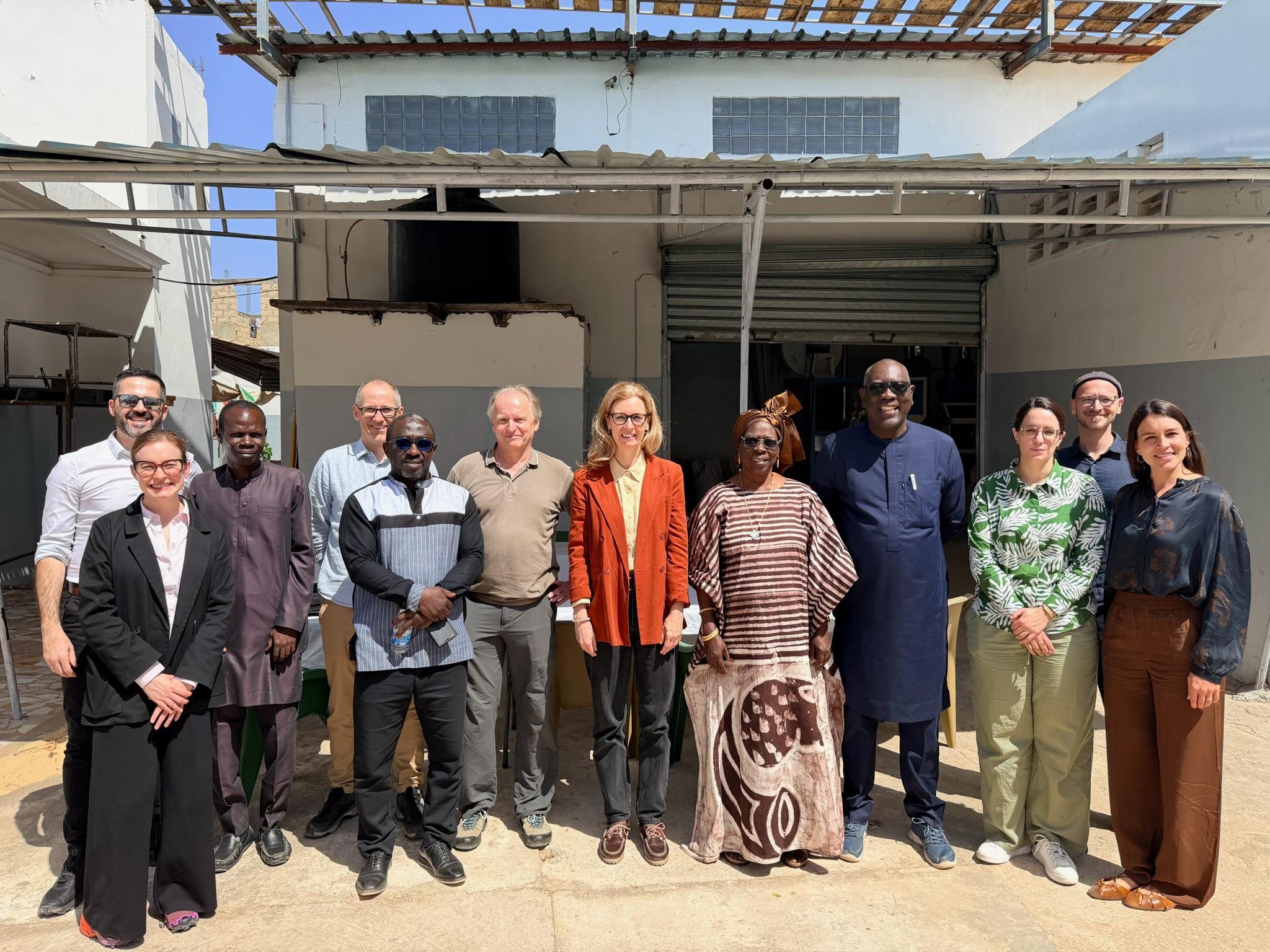
From 26 to 30 April 2026, Deputy Prime Minister Sabine Monauni traveled to Senegal, a priority country for Liechtenstein’s International Humanitarian Cooperation and Development (IHCD). She visited a number of Liechtenstein Development Service (LED) projects on sustainable food systems and held political talks to deepen the impact and implementation of programs on food security, climate adaptation and strengthening rural areas.
The LED has been active in Senegal for over 27 years. To date, Liechtenstein has provided more than 20 million Swiss francs for bilateral development cooperation projects. Since 2023, the activities have been bundled in the Senegal country program. The focus is on the transformation towards sustainable food systems based on agroecological approaches – as a response to climate change and biodiversity loss. The programs combine resource conservation, biodiversity and local value creation and create prospects, especially for the young population.
The country program is aligned with the national transformation agenda “Senegal 2050” and addresses, among other things, food security, climate adaptation, youth employment and the strengthening of rural areas.
During the project visits to Dakar, Rufisque, Sandiara, Fimela, Kaolack and Latmingué, the focus was on practical training, knowledge transfer and applied research. Training courses for young adults in agroecological production methods and entrepreneurial skills are supported. At the same time, traditional knowledge is systematically documented, anchored in educational institutions and introduced into the political dialog – with the aim of strengthening the resilience of food systems in the long term.
Other projects strengthen smallholder families and local markets: they promote the diversification of production, improve income and nutrition and increase resilience to climatic and economic risks. One focus is on empowering women. Together with its partner organizations, the LED also supports the expansion of organic farming – including through a participatory guarantee system and the “Bio Senegal” label to improve market access and framework conditions for organic products.
In addition, the LED relies on territorial approaches that better connect actors along the value chain – from producers to processing and trade. The focus is on inclusive local governance structures and the sustainable use of natural resources so that agroecological solutions can be broadly anchored and scaled up.
Deputy Prime Minister Sabine Monauni emphasized the importance of the work on the ground: “The project visits show how food security, climate adaptation and economic prospects can be combined in concrete terms. Investments in training, agroecological innovation and local value creation strengthen entire regions and open up new opportunities for young people and women in particular.”
In Dakar, Deputy Prime Minister Monauni held political talks with representatives of the Senegalese government, including Foreign Minister Cheikh Niang, Economics Minister Abdourahmane Sarr, Agriculture Minister Mabouda Diagne and a delegation from the Ministry of the Environment.
The focus was on bilateral relations in development cooperation as well as current regional and global developments. Both sides expressed their interest in further intensifying cooperation within the framework of a bilateral cooperation agreement.
In addition, Switzerland’s ambassador to Senegal, Tamara Mona, hosted a reception in Dakar. The event with representatives from politics, business, international organizations and non-governmental organizations provided an opportunity to exchange ideas and establish contacts.