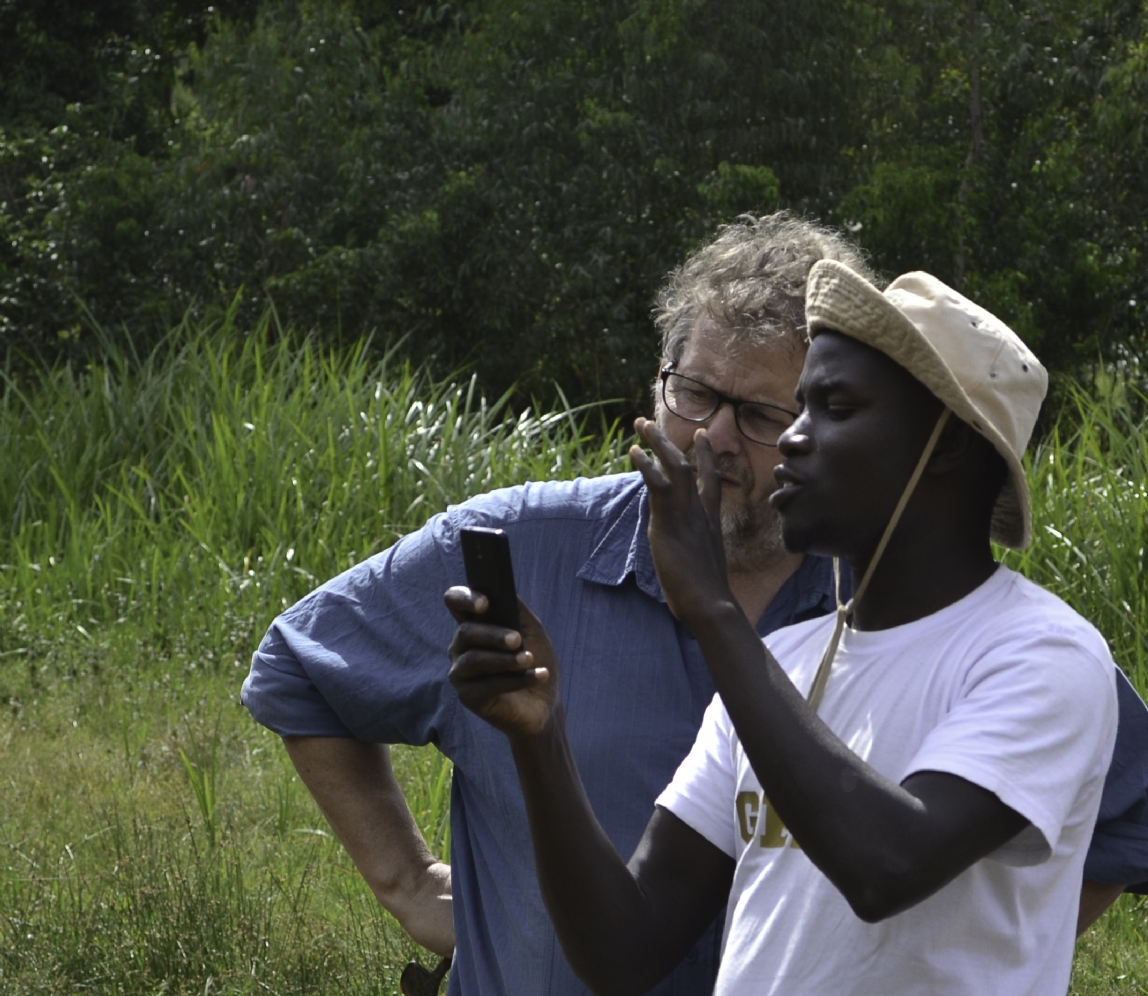
Ricus Jacometti has been committed to credible development cooperation based on partnership for many years.
The agronomist has worked in East Africa, Central Africa, South East Asia and the Caribbean and now brings his experience from the Medicor Foundation and the Tellerrand association, co-founder of the LED, to the Foundation Board. In this interview, he explains what motivates him, what values guide him and how he sees the future of development cooperation.
Mr. Jacometti, what motivates you to become involved in the LED Foundation Board?
My motivation is rooted in my long-standing passion for development cooperation. After studying tropical agriculture, I have been working in this field since the 1990s and have gained valuable experience in East and Central Africa, Southeast Asia and the Caribbean. I not only worked in these regions, but also lived there for several years. This intensive time on the ground has shown me which aspects are really crucial for the implementation of projects.
I have been working for the Medicor Foundation since 2011. This work has enabled me to look at development cooperation from a strategic perspective. Now I would like to work in the LED for a strategy that contributes to a fairer world – with well-founded, partnership-based approaches.
The Tellerrand association, co-founder of the LED, stands for the motto “think globally, act locally”. As a member of the association, I represent this seat on the Foundation Board, and it is precisely this approach that reflects my convictions. I see my role as building bridges between operational work on the ground and the long-term impact that the LED is striving for.
What values guide you?
In my work, I have witnessed a fundamental change in development cooperation, away from a paternalistic charity approach towards genuine partnership at eye level.
I am convinced that development cooperation is about creating opportunities and not prescribing solutions. Where and how these opportunities are used should be discussed as equals and implemented in partnership. It is not us who determine the direction, but we create the conditions together with our partners so that local knowledge and expertise can flourish.
For the past two years, I have also been working with an NGO on a program that follows precisely this approach. Local organizations should implement their own knowledge and are supported and strengthened in the process. This is precisely where I see the real meaning of development cooperation: genuine partnership instead of paternalism, empowerment instead of dependency.
Was there an experience that particularly shaped your understanding?
Yes, while working in Haiti shortly after the 2010 earthquake, I was part of an organization that was developing new houses in an affected area. The entire team – from the accountant to the driver – was involved in the development process.
The decisive moment came at the presentation of the model house: the Haitian team presented the results down to the smallest detail. The architect and the international team simply sat in the audience and listened.
This moment impressively showed me that the best solutions are created when local partners can confidently contribute their expertise.
How do you see the role of development cooperation in the coming years?
Development cooperation must continue to evolve, moving away from one-sided support towards genuine exchange on an equal footing. This exchange should also increasingly take the form of South-South and South-North cooperation, because learning is not a one-way street.
In the future, it will be even more important to empower local organizations to take responsibility and implement their own vision. They have the knowledge, the networks and the legitimacy to shape sustainable change.
What would you particularly like to promote on the LED Foundation Board?
It is important to me that financial resources are not seen as a tool for exerting influence, but as a resource for jointly developed solutions. The LED should cultivate partnerships that are based on trust and share decision-making power.
In concrete terms, for me this means project development together with local organizations, transparent decision-making processes and long-term relationships instead of short-term project logic. This is the only way to create solutions that offer everyone the chance of a fulfilling life – now and for future generations.
What has particularly impressed you during your time on the Foundation Board so far?
I have seen that the LED has achieved a great deal with its many years of targeted support. The new strategy is being implemented consistently and it is clear that the LED, as a small organization from a small country, has become an important player in the fields of agroecology and vocational training.
I was particularly impressed by how critically and conscientiously the employees and management reflect on their work. This professional attitude is essential for effective development cooperation.
And what has been a particular highlight for you in recent years?
A personal highlight was the development in Cambodia, where the LED has been building new partnerships and intensifying cooperation with the government for four years. This is an example of how strategic alignment works in practice.
An important milestone was the cooperation agreement between Liechtenstein and the LED in Cambodia, a significant step for the long-term anchoring of our work. The same applies to the increase in the development cooperation budget by the government. It is not only a financial boost, but also a strong sign of confidence in the work of the LED.
I was particularly touched by the 60th anniversary of the LED. The Tellerrand association has organized a wonderful gift, a play by the Creative Academy Liechtenstein. This creative and personal gesture made the long-standing bond tangible.
Thank you for the insights!