
Food systems
Promoting resilient communities through agroecological practices
Brief description of the project
The “ResComm2” project addresses the problems of food security and degraded landscapes in the semi-arid region of central Tanzania by promoting participatory agroecological practices. It empowers people with arable and livestock systems to adopt sustainable agricultural practices that improve household resilience, nutrition and income. The project builds on proven approaches to landscape restoration, integrated farm management and agri-entrepreneurship to restore degraded land, improve livestock productivity and create better nutrition and economic opportunities through diversified crops.
Project goals
The main objective is to demonstrate how landscape-level natural resource management and integrated farm management can improve household resilience, nutrition, income and job creation in a semi-arid crop-livestock system.
- The Kongwa district will become a learning site for the demonstration and scaling up of agroecological technologies at landscape level, which will be used by several stakeholders.
- The food security of households, income generation and the nutritional situation of smallholder farmers in the target areas are improved through the introduction of sustainable, nutrition-sensitive and resilient agricultural systems.
- Participatory agroecological landscape management is institutionalized through training, political dialogue and a supportive political framework.
Special features of the project
- Focus on empowering young people and women through agricultural entrepreneurship.
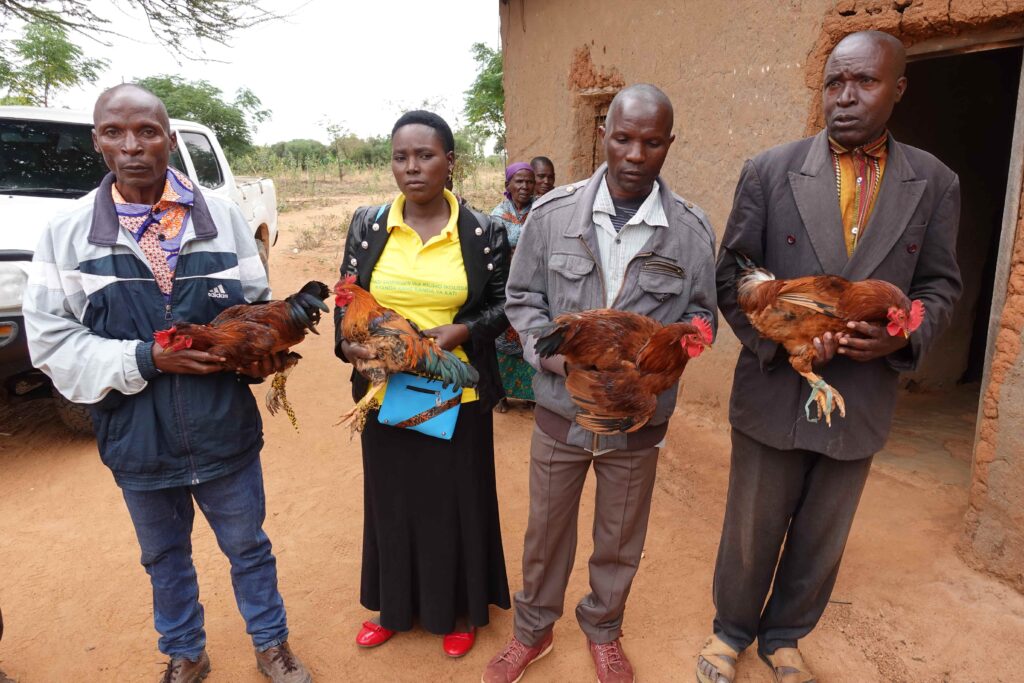
- Integration of sustainable livestock farming and climate-resilient crops (e.g. black-eyed peas, sorghum).
- Collaboration with trusted local partners for capacity development and scaling.
Country
Tanzania
Project duration
2024 - 2026
Total budget LED
USD 358‘500