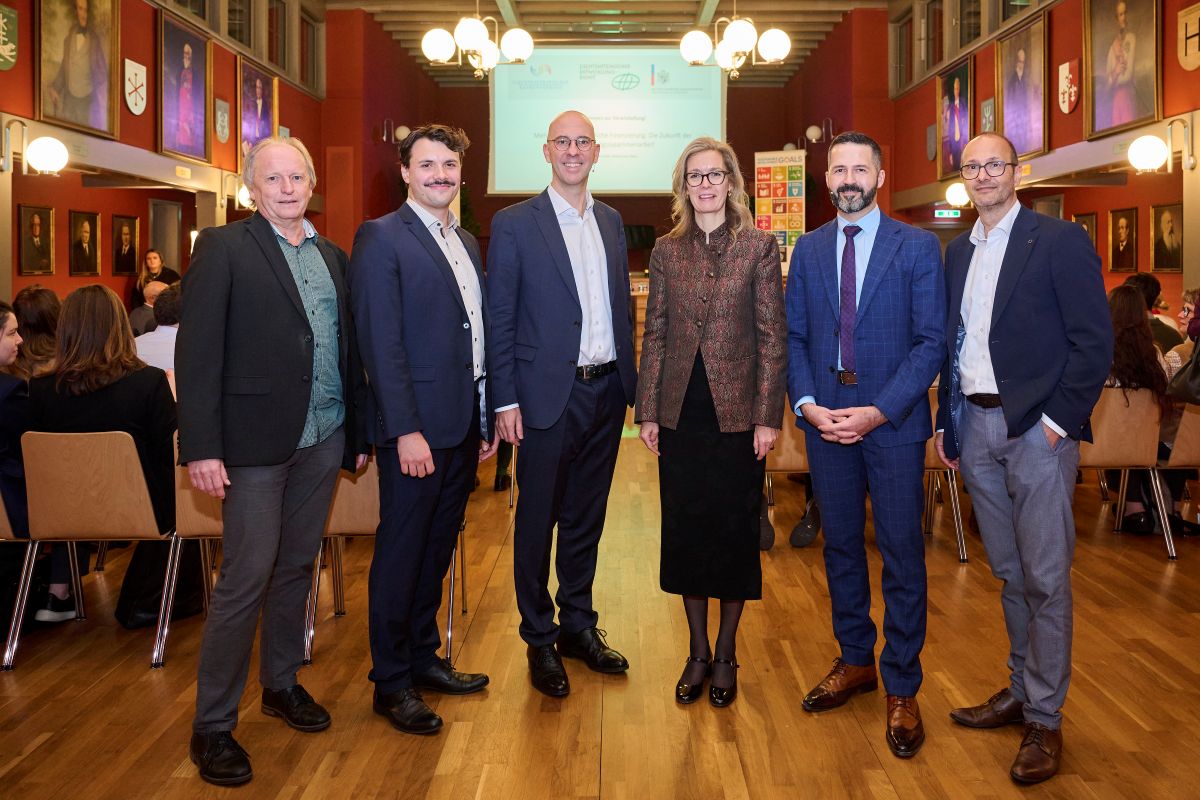
How can international development cooperation be financed in the future? And how can the government, the private sector, and development organizations work together to make a greater impact?
These questions were the focus of a public event held on November 2, 2026, in the City Hall in Vaduz. The event was organized by the Liechtenstein Development Service (LED), the Office of Foreign Affairs (AAA), and the Liechtenstein Bankers Association.
The challenges facing international development cooperation are significant: poverty, conflict, and climate change require long-term solutions and substantial financial resources. At the same time, public development funding is under increasing pressure. This makes it all the more important to tap into additional sources of funding and strengthen cooperation among various stakeholders.
Deputy Head of Government Sabine Monauni opened the event and emphasized that development cooperation is much more than just international solidarity. It also contributes to stability, security, and economic prospects. At the same time, she highlighted the potential of Liechtenstein’s financial center to contribute to sustainable development through innovative financing models.
In two keynote presentations, Martin Ewald and Maximilian Michael highlighted current developments and new approaches in development finance. One focus was on so-called blended finance models, in which public and private funds are combined to enable additional investments in sustainable development. The speakers also highlighted areas of development cooperation where both donor and recipient countries can benefit from collaboration.
For the LED, one thing is clear: To address global challenges, we need not only proven public development cooperation but also new partnerships and additional funding opportunities. It is crucial that the funds allocated have an impact where they are most urgently needed.