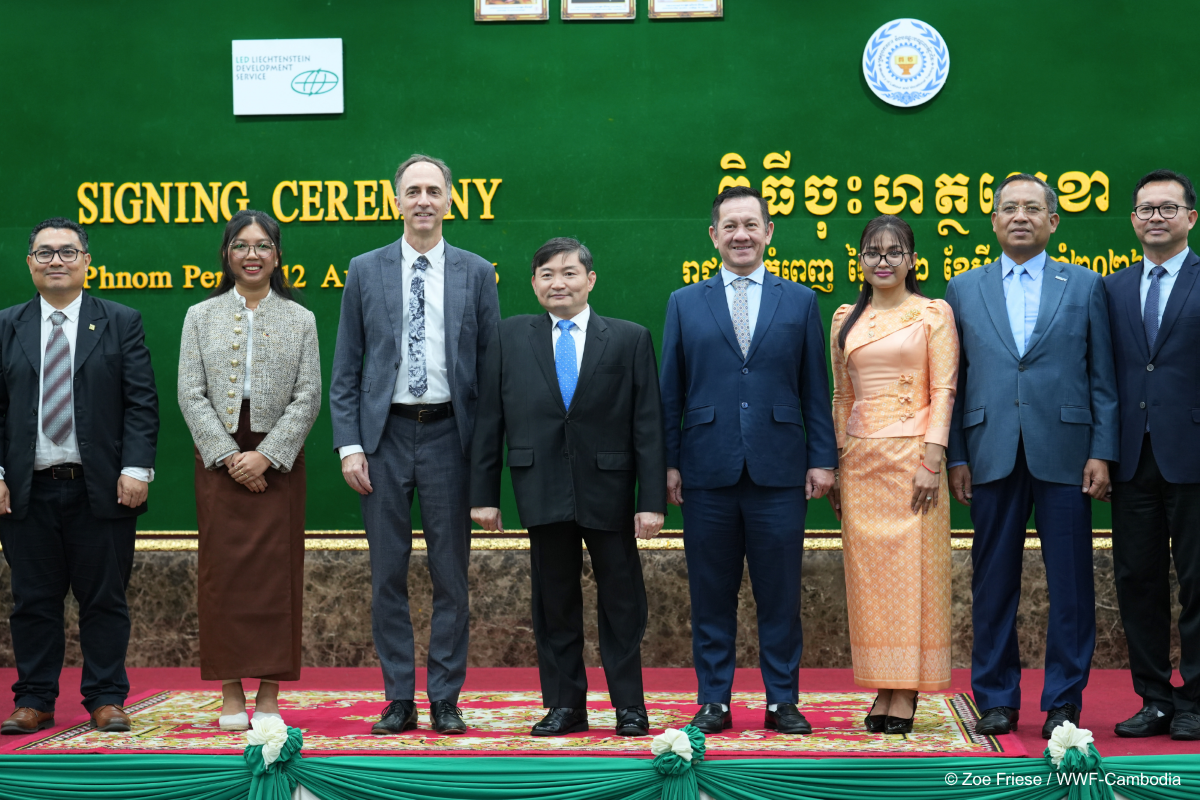
The Liechtenstein Development Service (LED) is strengthening its cooperation with the Cambodian Ministry of Labor and Vocational Training. On August 12, 2026, Labor Minister Heng Sour and Pius Frick, LED Coordinator for Cambodia, signed a Memorandum of Understanding in Phnom Penh. The collaboration focuses on strengthening vocational training in the field of solar technology.
One of the first joint initiatives is the LED-funded “Solar PV Skills for Cambodia” project, which is being implemented by WWF-Cambodia. Over the next two years, the project aims to support vocational schools in training qualified professionals for the growing solar sector.
Sharing Knowledge and Ensuring Its Long-Term Sustainability
A key component of the project is teacher training. In collaboration with experts from Solaire Sans Frontières, Don Bosco, and WWF, a practice-oriented training course in solar technology is being developed. In early 2027, approximately 45 teachers are scheduled to be trained at the National Technical Training Institute and at Don Bosco Cambodia.
They will not only acquire technical expertise but will also be prepared to train future professionals themselves. The goal is to embed this know-how in Cambodian vocational training institutions for the long term.
“With this project, we’re not just training solar technicians. We’re empowering teachers to continue this training on their own even after the project ends,” explains Pius Frick, LED coordinator for Cambodia. “With their knowledge and high-quality technical equipment, we’re laying the foundation for long-term capacity building.”
Vocational Training Supports the Energy Transition
Cambodia plans to significantly expand its use of solar energy in the coming years. According to the national energy development plan, installed solar capacity is set to rise to over 3,000 megawatts by 2040. In addition to investments in technology, this will require a workforce with the appropriate training. This is where the LED’s commitment comes in: practical vocational training improves employment opportunities for young people while also providing skilled workers for a more sustainable energy supply.
The project extends beyond vocational training institutions. In collaboration with the local organization Live and Learn Cambodia, indigenous farming communities in Ratanakiri are also being trained in the operation and maintenance of solar-powered water pumps. These pumps can help ensure a reliable water supply for agriculture, particularly as dry spells become more frequent.
With this new agreement, the LED and the Cambodian Ministry of Labor and Vocational Training are laying the groundwork for long-term cooperation. It brings together vocational training, employment, and renewable energy—and, above all, invests in one thing: people who can support and shape this transformation over the long term.