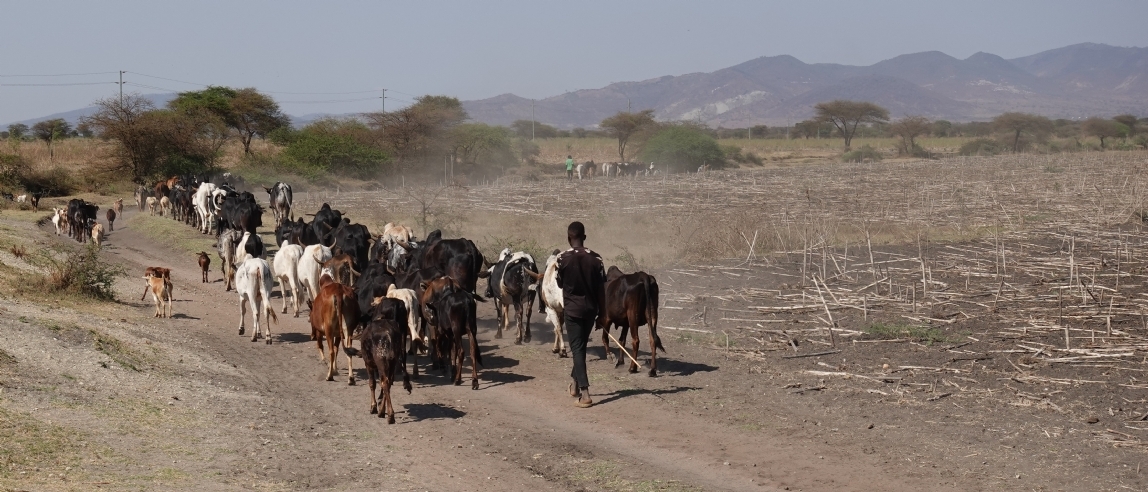
In many places in the Kongwa district in central Tanzania, the soil is hard, dry and depleted. Decades of overuse, little rain, a lack of trees and too little recovery time have left their mark. What used to be productive now yields hardly anything.
One of our current projects aims to change this.
The project relies on agroecological methods that are developed and implemented with the local people. The aim is to improve the food security and income of smallholder families and at the same time make the landscape fertile again.
Patrik Aus der Au, project manager at LED, says: “We work with methods that work: Crop rotation, humus building, climate-adapted plants such as sorghum and sustainable animal husbandry. The local people join in because they see that it works.”
In concrete terms, this means:
– Soils are revitalized through protective measures such as planting and composting
– Farming families learn how to better use and store hashtag#water
– Women and young people are given access to training and small-scale farming projects
– Hashtag#knowledge is passed on in so-called learning sites
– Political dialogues accompany the project and ensure long-term impact
What happens as a result?
“We are not just strengthening individual hashtag families, but entire village communities. It’s about people regaining confidence in the future of their agriculture,” says Patrik.
How do we implement this?
Together with the Biovision Foundation, Sustainable Agriculture Tanzania, the International Livestock Research Institute (ILRI), Kilimo and the Tanzania Agricultural Research Institute, we are making this three-year project possible.